

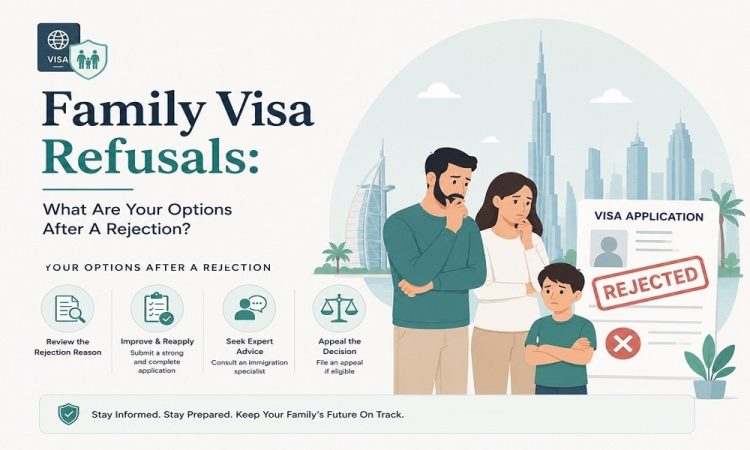
A family visa refusal can feel deeply personal. You may have spent months preparing documents, paying fees, waiting for a decision and planning your future in the UK, only to receive a refusal letter that seems cold, confusing or unfair.
When this happens, it is important not to panic. A refusal does not always mean the end of your case. Depending on the reason for the decision, you may be able to appeal, request a review, submit a fresh application or challenge the Home Office through legal action.
Family visa cases often involve your right to family life, so the decision can affect where you live, whether you can join your partner, whether your child can remain with you, or whether your family can stay together in the UK. This is why many people choose to speak with an immigration specialist such as Garth Coates Solicitors UK before deciding what to do next.
The cost of getting it wrong can also be high. From 8 April 2026, many UK immigration and nationality fees increased, with family-related applications often costing hundreds or thousands of £ depending on the route and whether you apply from inside or outside the UK. So before you rush into a new application, it is worth understanding your options properly.
Why Are Family Visas Refused?
Family visas can be refused for many reasons. Sometimes the issue is simple, such as missing bank statements, unclear payslips or a document uploaded in the wrong format. In other cases, the Home Office may question whether your relationship is genuine, whether the financial requirement is met, or whether the accommodation is suitable.
Common reasons for family visa refusals include:
- Not meeting the minimum income requirement
- Not providing enough relationship evidence
- Missing documents or incorrect translations
- Problems with the sponsor’s immigration status
- Concerns about previous immigration history
- Incorrect application form answers
- Failure to meet English language requirements
- Not proving adequate accommodation
- Public funds or maintenance concerns
- Human rights arguments not being accepted
The refusal letter should explain why the Home Office rejected your application. Read this carefully. The reason for refusal usually determines your next step.
Option 1: Appeal The Family Visa Refusal
Many family visa refusals carry a right of appeal, especially where the decision affects your human rights or family life. This means you can ask an independent tribunal to look at the decision again.
An appeal is not just a complaint. It is a legal process where you explain why the Home Office decision was wrong. You may be able to provide legal arguments, evidence, witness statements and supporting documents.
The tribunal system has been under increasing pressure. In the October to December 2025 quarter, the First-tier Tribunal Immigration and Asylum Chamber saw a 48% increase in receipts compared with the same period in 2024. This shows why appeals can take time and why it is important to prepare your case properly from the beginning.
How Long Do You Have To Appeal?
Deadlines are strict. In many immigration appeal cases, you may only have a short time to act. If you are inside the UK, the appeal deadline is often 14 days. If you are outside the UK, it is often 28 days.
You should check your refusal letter immediately because it should tell you whether you have a right of appeal and what deadline applies. Missing the deadline can make your case much harder, although in some situations you may be able to ask for permission to appeal late.
Paper Appeal Or Oral Hearing?
If you appeal, you may be able to choose between a paper appeal and an oral hearing.
A paper appeal means the judge decides the case based on written documents only. This may be suitable where the issue is narrow and the evidence is strong.
An oral hearing means you or your representative can attend the tribunal and explain the case. This can be useful in family visa cases where the genuineness of a relationship, personal circumstances or human rights factors are important.
A paper appeal may cost less, but an oral hearing often gives you a better opportunity to explain your situation. The right choice depends on your case.
Option 2: Submit A Fresh Family Visa Application
In some cases, a fresh application may be quicker and more practical than an appeal.
For example, if your visa was refused because you forgot to include a bank statement, missed a payslip or uploaded the wrong document, a new application with corrected evidence may be the better route.
However, you should be careful. A fresh application means paying the application fee again, and possibly the Immigration Health Surcharge if it applies. Family visa fees can be significant, especially where dependants are included. From 8 April 2026, updated Home Office fees apply across many visa and nationality categories.
A fresh application also does not erase the refusal. The Home Office may still look at your previous refusal when considering the new case. This means you should directly address the earlier problems instead of pretending the refusal did not happen.
Option 3: Ask For An Administrative Review
Administrative review is only available for certain immigration decisions. It is usually used where you believe the Home Office made a caseworking error.
This might include:
- Misreading a document
- Applying the wrong rule
- Ignoring evidence that was submitted
- Making a factual mistake
- Calculating dates or finances incorrectly
Administrative review is not available for every family visa refusal, so you need to check the refusal letter carefully. If you do have this option, it may be worth using where the refusal is clearly based on an error rather than missing evidence.
Option 4: Challenge The Decision Through Judicial Review
Judicial review is a legal challenge against the way a public body made a decision. It is not the same as an appeal. The court does not simply replace the Home Office decision with its own view. Instead, it looks at whether the decision was lawful, fair and properly made.
Judicial review may be relevant where there is no right of appeal, or where the Home Office has acted unlawfully, irrationally or unfairly. It can be a complex and technical process, so legal advice is strongly recommended before taking this route.
Should You Appeal Or Reapply?
This is one of the biggest questions after a family visa refusal.
An appeal may be better if the Home Office made a poor decision, ignored strong evidence or unfairly questioned your relationship. It may also be suitable where your case involves strong human rights arguments.
A fresh application may be better if the refusal happened because of missing or weak documents that can now be fixed quickly.
However, the wrong choice can waste time and money. For example, appealing a case that would be easier to fix with a fresh application may delay your family plans. On the other hand, reapplying when the Home Office’s reasoning should be challenged may lead to another refusal.
What Evidence Can Help After A Refusal?
The right evidence depends on the refusal reason, but useful documents may include:
- Updated bank statements and payslips
- Employment letters
- Tenancy agreements or property documents
- Marriage or civil partnership certificates
- Photos, travel records and communication history
- Birth certificates for children
- Witness statements
- Medical or care evidence
- Evidence of family life in the UK
- Proof of hardship if the family is separated
Do not simply send more documents without a clear strategy. Your evidence should directly answer the Home Office’s concerns.
What Should You Do Immediately After A Refusal?
First, read the refusal letter in full. Look for the reason for refusal, whether you have a right of appeal and the deadline.
Second, do not make a rushed decision. It may be tempting to submit a new application straight away, especially when you are upset or under pressure. But if the same problem remains, you may receive another refusal.
Third, gather all documents you originally submitted. You need to know exactly what the Home Office saw before deciding whether they made a mistake.
Finally, seek legal advice as early as possible. Family visa refusals are time-sensitive, and small mistakes can have serious consequences.
Can A Refusal Affect Future Applications?
Yes, it can. A previous refusal does not automatically mean your next application will be refused, but it can affect how the Home Office views your case.
If the refusal raised concerns about credibility, documents or relationship evidence, those concerns may come up again. That is why any new application should clearly explain what went wrong before and how the new evidence deals with it.
Final Thoughts
A family visa refusal is upsetting, but you may still have options. You might be able to appeal, reapply, request a review or challenge the decision through judicial review. The best route depends on the refusal reason, your deadline, your evidence and your personal circumstances.
The most important thing is to act quickly and carefully. Do not ignore the refusal letter, do not miss your deadline and do not submit the same application again without fixing the problem.
If your family visa has been refused and you are unsure what to do next, speak to an experienced UK immigration solicitor. A specialist can review the refusal, explain your options and help you choose the strongest route forward.
Need help after a family visa refusal? Contact Garth Coates Solicitors today to discuss your case and get clear advice on your next steps.


