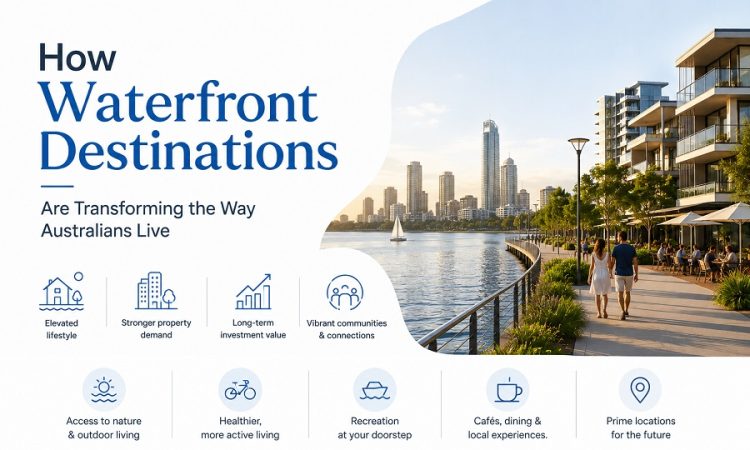
For generations, living near the water has been considered one of Australia’s most desirable lifestyle choices.
Whether it’s a coastal town, a marina precinct, or a waterfront suburb, these locations have consistently attracted people seeking a better balance between work, recreation, and everyday living. While the appeal of waterfront property is often associated with scenic views and leisure activities, its value extends much further.
Modern waterfront communities are increasingly becoming complete lifestyle destinations. They combine residential living, dining, entertainment, recreation, and public spaces in ways that create vibrant environments for residents and visitors alike.
As Australians place greater importance on lifestyle quality, destinations that successfully integrate these elements are attracting growing interest from homebuyers, investors, and families.
The Growing Appeal of Lifestyle-Led Communities
Property decisions today are influenced by much more than housing alone.
Buyers increasingly evaluate:
- Walkability
- Recreation opportunities
- Dining options
- Public spaces
- Community atmosphere
- Access to nature
This shift reflects changing priorities among Australians who are seeking locations that support wellbeing and social connection alongside housing needs.
Waterfront communities often excel in these areas because they naturally encourage outdoor living and community interaction.
Why Public Spaces Matter
One of the defining characteristics of successful waterfront developments is the quality of their public spaces.
Parks, promenades, plazas, and foreshore areas provide opportunities for:
- Walking
- Cycling
- Family activities
- Social gatherings
- Community events
These spaces contribute significantly to a location’s identity and help create environments where people enjoy spending time.
Strong public spaces often support local businesses while improving the overall liveability of a neighbourhood.
The Rise of Experience-Based Living
Today’s consumers increasingly value experiences over possessions.
This trend has influenced many aspects of modern life, including housing preferences.
People want communities where they can:
- Enjoy outdoor activities
- Meet friends locally
- Attend events
- Access entertainment
- Spend time in attractive surroundings
Waterfront destinations are particularly well positioned to meet these expectations because they combine natural beauty with recreational opportunities.
Dining and Hospitality as Community Anchors
Restaurants, cafés, and hospitality venues often play an important role in shaping a community’s atmosphere.
Beyond providing food and beverages, these businesses create social gathering spaces that encourage interaction and contribute to a destination’s character.
A well-designed waterfront tavern shell cove can become much more than a dining venue. It can serve as a community focal point where residents and visitors gather, helping strengthen local identity and supporting economic activity.
Hospitality venues often contribute significantly to the vibrancy and attractiveness of waterfront precincts.
Why Coastal Living Continues to Attract Buyers
Australia’s coastline remains one of the country’s most sought-after residential environments.
Coastal living offers access to:
- Beaches
- Waterfront recreation
- Open spaces
- Outdoor activities
- Scenic environments
These features can support both physical and mental wellbeing while contributing to a more relaxed lifestyle.
As flexible work arrangements become increasingly common, more Australians are exploring opportunities to live closer to the coast without sacrificing professional opportunities.
Community Identity Drives Demand
One of the most valuable characteristics of successful residential destinations is a strong sense of identity.
People are often drawn to locations that feel distinctive and memorable.
Community identity may be shaped by:
- Natural features
- Architecture
- Public spaces
- Local businesses
- Cultural activities
Waterfront communities frequently benefit from strong identities because their natural setting provides a unique foundation for development.
The Economic Impact of Waterfront Precincts
Waterfront developments can generate significant economic benefits.
They often attract:
- Tourism
- Retail activity
- Hospitality businesses
- Recreational services
- Residential investment
This activity supports local employment while contributing to broader economic growth.
Well-designed waterfront precincts can become important regional destinations that attract visitors throughout the year.
Recreation and Wellbeing
Access to recreational opportunities has become increasingly important in residential decision-making.
Many people seek communities that support:
- Walking
- Cycling
- Boating
- Fishing
- Outdoor exercise
Waterfront environments naturally facilitate many of these activities.
The ability to incorporate recreation into daily life can significantly enhance quality of life and contribute to long-term resident satisfaction.
Why Walkability Matters
Walkability is becoming one of the most important considerations in modern urban planning.
Walkable communities offer:
- Greater convenience
- Reduced reliance on cars
- More social interaction
- Health benefits
Waterfront precincts often perform well in this area because they encourage pedestrian activity through promenades, public spaces, and mixed-use development.
The Importance of Long-Term Planning
Successful waterfront destinations rarely emerge by accident.
They require careful planning that balances:
- Residential development
- Public access
- Environmental protection
- Commercial activity
- Community needs
Long-term planning helps ensure these areas remain attractive and functional as populations grow and communities evolve.
Shell Cove as a Modern Waterfront Destination
The evolution of Shell Cove demonstrates how modern waterfront communities can combine residential living with recreation, hospitality, retail, and public spaces.
Rather than functioning solely as a residential suburb, Shell Cove has developed into a destination that supports a wide range of activities and experiences.
This integrated approach reflects broader trends in Australian property markets, where buyers increasingly seek communities that offer both convenience and lifestyle.
Conclusion
Waterfront communities continue to hold a unique place within Australia’s property landscape.
Their appeal extends far beyond scenic views, encompassing recreation, hospitality, walkability, community identity, and quality of life.
The growing popularity of destinations such as Shell Cove highlights the increasing importance of lifestyle-led development. At the same time, venues like a waterfront tavern shell cove demonstrate how hospitality and public gathering spaces contribute to vibrant and successful communities.
As buyer preferences continue evolving, waterfront destinations are likely to remain among the most desirable places to live, visit, and invest.